
When you think of laboratory equipment, sapphire tubes might not be the first thing that comes to mind. Glassware, stainless steel, and plastic tubing often dominate lab setups, while sapphire tubes seem like something reserved for sci-fi movies or high-tech physics labs. Yet, these crystalline marvels quietly hold a crucial role in modern laboratories worldwide. Their unmatched durability, chemical inertness, and optical clarity make sapphire tubes a silent hero for applications that demand precision under extreme conditions. Whether you’re dealing with corrosive chemicals, high temperatures, or delicate optical experiments, understanding how to select the right sapphire tube can transform your laboratory workflow.
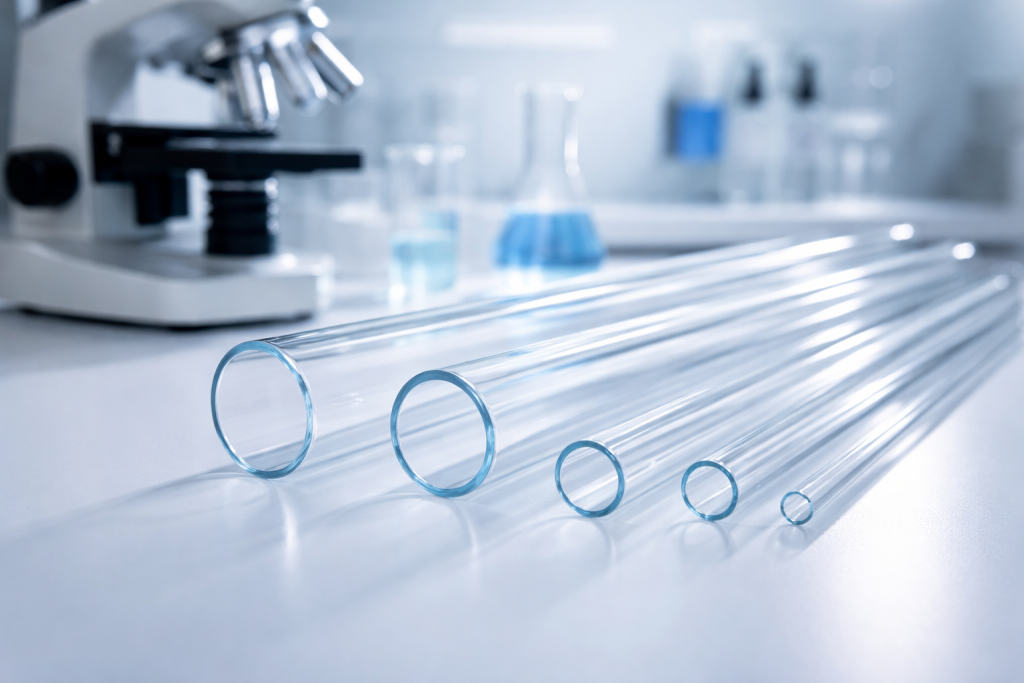
Why Sapphire Tubes Are More Than Just Pretty Crystals
Sapphire is the single-crystal form of aluminum oxide (Al₂O₃), and it is not just a gemstone—it’s a technical powerhouse. Ranking second only to diamond in hardness, sapphire tubes can resist scratches and wear that would destroy conventional glass or plastic tubing. This hardness ensures longevity, even in harsh lab conditions where accidental impacts or abrasion are common.
Beyond durability, sapphire tubes can withstand extreme temperatures, sometimes exceeding 2000°C, and tolerate a wide range of aggressive chemicals, including acids, oxidizers, and solvents. Unlike metals, they do not corrode or react with most laboratory reagents, making them ideal for high-purity experiments. Furthermore, their optical transparency in the visible and near-infrared spectrum allows scientists to perform optical measurements directly through the tube wall—something that ordinary glass or quartz cannot achieve reliably.
In short, sapphire tubes combine mechanical strength, thermal stability, chemical inertness, and optical clarity—a rare combination that is invaluable in demanding laboratory environments.
Key Factors in Selecting Sapphire Tubes
Choosing the right sapphire tube is not just about picking the right diameter. A careful consideration of multiple factors ensures the tube performs reliably and safely in your lab. Here’s a closer look:
1. Dimensions Matter
The inner diameter (ID), outer diameter (OD), and length of a sapphire tube are critical. These dimensions determine how the tube integrates into your experimental setup. A tube that is slightly too small or too large can compromise flow rates, sealing efficiency, or even mechanical stability. Labs often underestimate the importance of tolerances—unlike glass, sapphire is brittle, and misalignment can cause cracking or catastrophic failure.
2. Purity and Optical Clarity
For experiments requiring high chemical precision or optical measurements, purity and transparency are paramount. Most laboratory-grade sapphire tubes have purity levels of 99.999% or higher. Lower purity can introduce contaminants that interfere with chemical reactions, while poor optical clarity can distort light transmission in optical experiments. Polished tubes allow for maximum transparency and better visualization of reactions or optical signals.
3. End Finish and Surface Quality
Sapphire tubes can have polished or unpolished ends. Polished ends are necessary for applications requiring optical clarity or precise sealing with other lab equipment. Unpolished ends may suffice for general chemical containment or structural support. Surface quality also affects chemical interaction—smooth surfaces reduce the risk of unwanted reactions or buildup of residues.
4. Thermal and Mechanical Requirements
Laboratory experiments often involve extreme conditions, such as rapid heating/cooling cycles or mechanical stress from pressurized fluids. Sapphire’s thermal shock resistance is high compared to most materials, but sudden temperature changes can still induce stress fractures. Careful assessment of the tube’s mechanical load capacity and thermal limits is essential, especially when integrating sapphire tubes into reactors, furnaces, or optical setups.
5. Chemical Compatibility
While sapphire is chemically inert to most substances, it is not universally resistant. Molten alkali metals and some highly concentrated bases can etch or damage sapphire. Understanding the chemical environment of your experiment ensures the tube maintains structural integrity and purity over time.
6.カスタマイズオプション
Modern laboratories often require specialized solutions. Fortunately, sapphire tubes can be customized in terms of length, diameter, curvature, coating, or integration with other materials. This flexibility allows scientists and engineers to design precise lab setups that would be impossible with conventional materials.
Practical Applications of Sapphire Tubes in Laboratories
Sapphire tubes are no longer exotic; they have found practical roles across multiple scientific disciplines:
- High-Temperature Chemistry: In experiments involving molten salts, metal vapor deposition, or high-temperature reactions, sapphire tubes resist thermal shock and chemical attack where glass or quartz would fail.
- Optical Experiments: Laser experiments, photonics, and spectroscopy benefit from sapphire’s optical transparency and minimal light absorption.
- Vacuum and Gas Handling: Sapphire tubes can operate in high vacuum environments without outgassing or contamination, making them suitable for gas analysis and semiconductor processing.
- Corrosive Environments: Acidic, basic, or oxidative environments pose minimal threat to sapphire, allowing safe containment of aggressive chemicals.
- Biomedical Applications: For high-purity reactions or imaging experiments, sapphire tubes maintain sterility and chemical stability.
Tips and Best Practices From the Lab
- Check Compatibility Thoroughly: Always confirm chemical compatibility, temperature limits, and mechanical requirements. Even high-purity sapphire has limitations.
- Select Proper Mounting Hardware: Clamps, seals, and supports should account for thermal expansion. Inappropriate hardware can cause stress points and cracking.
- Work With Experienced Suppliers: Not all sapphire tubes are created equal. Suppliers familiar with laboratory applications can provide tubes with accurate dimensions, certified purity, and documented quality control.
- Consider End-to-End Lifecycle: Think about maintenance, cleaning, and long-term durability. Sapphire tubes are durable, but proper handling extends their useful life.
Sapphire vs. Other Materials: Why It Matters
Compared to borosilicate glass, stainless steel, or quartz, sapphire tubes offer a unique combination of features. Glass may crack under thermal stress, metals can corrode or contaminate samples, and quartz lacks the mechanical strength of sapphire. By investing in sapphire tubes, laboratories gain reliability, repeatability, and the ability to push experiments further—often beyond the limits of conventional materials.
Conclusion: A Smart Choice for High-Performance Labs
Selecting the right sapphire tube is more than a technical decision—it’s a strategic choice that ensures precision, safety, and longevity in demanding laboratory environments. By understanding dimensions, purity, end finish, thermal and mechanical requirements, and chemical compatibility, laboratories can harness the full potential of sapphire.
Whether your experiment involves extreme heat, corrosive chemicals, or optical measurements, sapphire tubes offer a combination of durability, clarity, and chemical inertness unmatched by conventional materials. As laboratories continue to push the boundaries of science, sapphire tubes will remain a dependable partner, quietly performing where others fail.
In the ever-evolving world of laboratory research, giving sapphire its moment in the spotlight is not just a nod to elegance—it’s a commitment to excellence.